As December begins, the air in the shrine slowly takes on the feeling of the year’s close. This season in Japan is a time to prepare and bring things back into order.
At the start of the new year, people welcome Toshigami, the deity believed to protect each household and grant strength for the year ahead. Cleaning the home and preparing New Year decorations are important steps in making a place for this deity to visit.
Many people visit the shrine in December to clear their minds before the new year. A quiet visit can help reset your thoughts and gently prepare you for the days ahead.
In the coming weeks, we will share information about year-end prayers, including yakuyoke and other blessings for the new year.
Autumn Harvest and Prayers of Gratitude Koyasu Shrine, Hachioji Tokyo Blog Series
Part 5 — Naorai: Sharing the Divine Meal
After a Shinto ritual, it is customary for participants to partake in the food offered to the deities— a sacred practice known as Naorai. It represents the act of sharing a single meal with the gods, a moment of gratitude and unity that has been passed down since ancient times.
The food presented before the altar, known as Shinsen, is believed to be imbued with divine energy. By partaking of it, people receive the blessings of the deities and purify both body and heart. Thus, Naorai symbolizes the deep bond between the divine and humankind.
This spirit of “sharing together” also lives in the family table of everyday life. To give thanks, to cherish life, and to care for one another— these are expressions of the same faith that nurtures Japan’s spiritual tradition.
At Koyasu Shrine in Hachioji, Tokyo, the offerings are reverently removed after each ritual, and prayers are renewed in harmony with the gods. The wish for safe childbirth and the healthy growth of children flows from this timeless spirit of Naorai, where life itself is shared as a sacred blessing.
Autumn Harvest and Prayers of Gratitude Koyasu Shrine, Hachioji Tokyo Blog Series
The Niiname-sai (Harvest Thanksgiving Festival)
Today, Koyasu Shrine in Hachioji, Tokyo, held the Niiname-sai, the ancient festival of gratitude for the year’s harvest. Rice grown in the shrine’s sacred paddy was harvested by hand and reverently offered before the altar.
The Niiname-sai is a time-honored Shinto ritual in which newly harvested rice is presented to the deities in thanks for the blessings of abundance and peace. Since ancient times, the Emperor himself has observed this day at the Imperial Palace, offering prayers for the well-being of the nation and its people.
At Koyasu Shrine, we expressed gratitude for the bounty of nature and prayed for the health, safe childbirth, and happiness of all families. As the rice ripens and life continues to flourish, we renew our appreciation for the divine cycle that sustains us all.
Autumn Harvest and Prayers of Gratitude Koyasu Shrine, Hachioji Tokyo Blog Series
Part 4 — Offerings to the Deities: The Pure Heart of Shinsen
At Shinto shrines, food offerings to the deities are called Shinsen. These offerings—rice, salt, water, and seasonal blessings from the mountains and sea— are presented to express gratitude for nature’s gifts.
Since ancient times, the Japanese people have maintained harmony with the divine not only by receiving blessings from nature, but by returning them through acts of offering. Shinsen is not merely a ritual, but a gesture of sincerity and purity from the heart.
In Shinsen, what matters most is not quantity or luxury, but sincerity and purity. Cooking fresh rice, drawing clean water, and preparing salt— each simple act carries a prayer within it.
At Koyasu Shrine in Hachioji, Tokyo, fresh rice and water are offered every morning, carrying the prayers of those who seek safe childbirth and healthy families. Both the ripening of rice and the nurturing of life are blessings born of the same divine cycle
Autumn Harvest and Prayers of Gratitude Koyasu Shrine, Hachioji Tokyo Blog Series
Part 3 — The Sacred Spirit in Rice: The Heart Within “Itadakimasu”
In Japan, rice has long been believed to hold a divine spirit. Each grain was thought to contain the Inadama—the soul of the rice— and eating it was considered an act of receiving the blessings of the gods.
The Japanese word for cooked rice, gohan, comes from on-meshi, meaning “honorable food.” Thus, the gesture of saying itadakimasu before meals expresses gratitude to nature, the deities, and all life that sustains us.
In Shinto, offerings of food to the gods are called Shinsen. Pure items such as rice, salt, and water are placed before the altar, representing thanksgiving for life’s blessings. Through food, people are connected with the divine— a practice that has shaped Japanese spirituality since ancient times.
At Koyasu Shrine in Hachioji, Tokyo, rice is offered daily to the deities in prayers for safe childbirth and the health of every family. By remembering the sacred spirit within each meal, we continue the timeless prayer of gratitude that lives within itadakimasu.
Autumn Harvest and Prayers of Gratitude Koyasu Shrine, Hachioji Tokyo Blog Series
Part 2 — The Cycle of Rice and Prayer: Festivals Through the Four Seasons
Rice cultivation in Japan follows the rhythm of the seasons, each stage marked by prayers and festivals. In spring, seeds are sown and the Otaue-sai (rice-planting festival) welcomes the god of the fields, asking for abundant growth and a fruitful harvest.
In summer, people prayed for calm winds and gentle rain. At Tatsuta Taisha in Nara, the wind god Shinatsuhiko-no-Kami was enshrined, while Hirota Shrine in Hyogo offered prayers to the Aramitama, the powerful aspect of Amaterasu Omikami, to still the winds. Wind gives life to rice, yet can also destroy the fields— thus ancient people revered its dual nature and sought harmony with it.
In autumn, the Nuiho-sai marked the harvest, and the Niiname-sai offered the first fruits to the deities in gratitude. The field deity was believed to return to the mountains after the harvest, only to descend again with the spring—symbolizing the eternal cycle of life.
At Koyasu Shrine in Hachioji, Tokyo, rice grown in the sacred paddy is offered before the altar, with prayers for nature’s blessings, safe childbirth, and the health of every family. The cycle of rice and prayer reflects the rhythm of life itself.
At Koyasu Shrine in Hachioji, Tokyo, families gather in autumn to express gratitude for their children’s growth and to pray for their continued well-being. The Shichi-Go-San ceremony is an important milestone to give thanks to the gods and to pray for a happy future as children grow up.
Koyasu Shrine is well known as a sacred place dedicated to safe childbirth and child-rearing. From prayers for safe delivery to naming ceremonies, the first shrine visit, and then Shichi-Go-San, the shrine has long been a place where families pray for each stage of their children’s growth.
During the ceremony, Shinto priests recite sacred words, and families offer their prayers together before the altar. In the quiet and solemn atmosphere, gratitude and hope fill the hearts of parents and children alike— a moment that becomes a precious memory in the child’s life.
Cherished as one of Tokyo’s shrines for safe childbirth and child-rearing, Koyasu Shrine welcomes families to celebrate Shichi-Go-San with sincere prayers of thanks and joy.
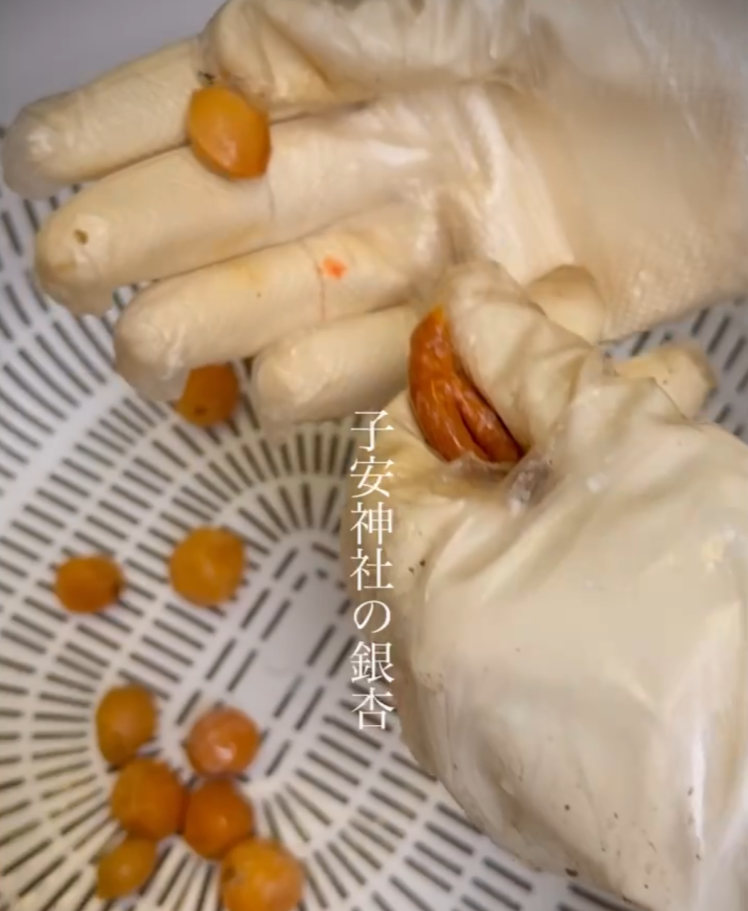
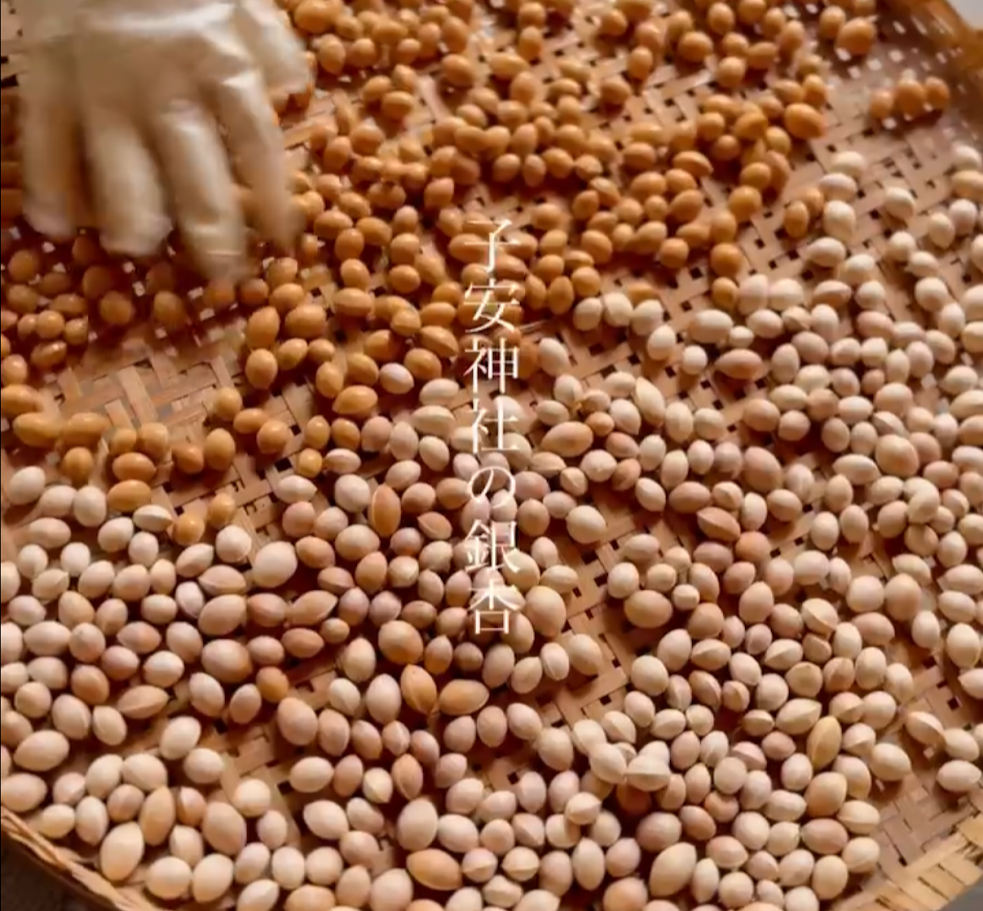
The ginkgo trees in the grounds of Koyasu Shrine have turned golden once again. Each autumn, they bless us with small, shining fruits. We carefully gather them from beneath the sacred trees, remove the outer flesh, wash them clean, and let them dry under gentle air and sunlight.
This quiet work is more than preparation—it is a moment of gratitude, offering thanks for the blessings of the season. When the silver nuts are all cleansed and drying in the light, their soft scent and golden glow fill the shrine with peace.
In the next post, we will share how these ginkgo nuts are wrapped and prepared for offering.
Autumn Harvest and Prayers of Gratitude Koyasu Shrine, Hachioji Tokyo Blog Series
Part 1 — The Prayer That Brings Life to Harvest: The Origins of Japanese Rice Cultivation
At the heart of Japan’s faith lies a deep connection with rice cultivation. The people of the Jomon era revered mountains, seas, fire, and wind as deities, expressing gratitude for being sustained by nature itself.
With the coming of the Yayoi period, rice farming was introduced, and human prayers shifted from fearing nature to thanking it. Rice became not only food but a symbol of life itself, and offering its first harvest to the deities formed the foundation of Shinto belief.
From these roots arose the worship of the Ta-no-Kami, the god of the rice fields, who was believed to descend to the fields in spring and return to the mountains after harvest— a rhythm mirroring the eternal cycle of life.
Meanwhile, the ancient faith of Suwa, where Takeminakata-no-Kami is enshrined, preserved the older reverence for the raw powers of nature—wind, water, and vitality itself. The fusion of this awe with gratitude for the harvest shaped the spirit of Japanese prayer.
At Koyasu Shrine in Hachioji, Tokyo, this ancient spirit endures. Prayers for safe childbirth and the healthy growth of children are offered with the same reverence for life that has flowed since the dawn of Japan.
The Sacred Dance of Prayer — The Spirit of Kaguramai
Kaguramai, the sacred dance performed at Shinto shrines, has long been an expression of gratitude and prayer to the deities. It is not a performance for entertainment, but a spiritual form that connects the divine and the human. Within each quiet movement and sound lives a heart sincerely turned toward the gods.
The origin of Kaguramai lies in the belief that the gods are pleased through beauty and sincerity. Blessings of rice, the gift of life, and the changing of the seasons — all are expressions of gratitude offered through dance. The dancer purifies heart and body, stands humbly before the divine, and dedicates each gesture as a prayer. In that moment, the shrine becomes a sacred place where the human and divine meet.
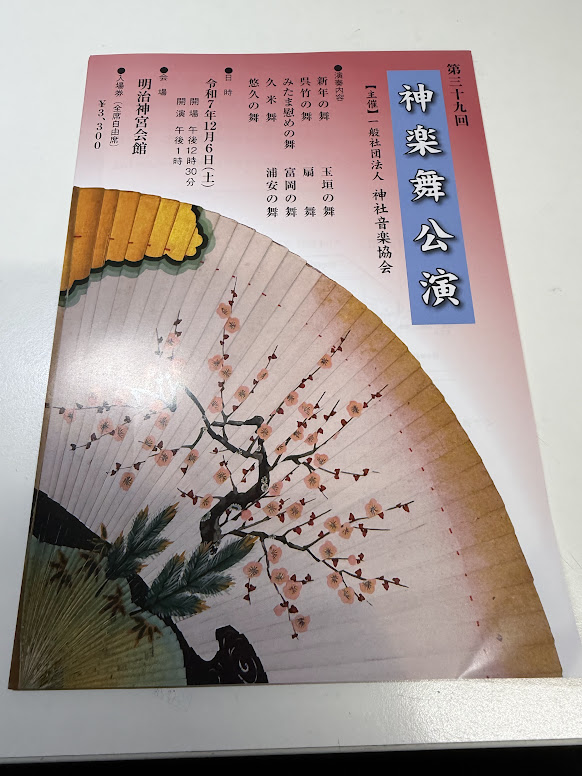
Even today, Kaguramai continues to be passed down at shrines throughout Japan. At Koyasu Shrine, a sacred dance is offered every year during the Hatsu Kotohira-sai on January 9th, as a prayer of gratitude to the deities and for peace within the community.
The group that provides instruction for this dance also holds the annual Kaguramai Performance at Meiji Jingu, where traditional dances from shrines across Japan are presented. It offers a rare opportunity to experience how sacred dance continues to live as a part of Japan’s spiritual culture.
Every movement in Kaguramai carries meaning — the opening of a fan symbolizes the unfolding of heaven and earth, the ringing of bells purifies the space and calls upon the divine, and a bow expresses gratitude and reverence. These gestures are prayers beyond words, embodying the Japanese spirit of harmony and respect for life.
Though not a grand spectacle, the quiet beauty within Kaguramai reveals its true essence. At Koyasu Shrine, this spirit of prayer is cherished and passed on to future generations, as we continue to uphold this sacred tradition through daily service and devotion.